What exactly are you renting? This is a short tour of the four ways a business can access artificial intelligence and how to decide which one you actually need. Let me give you the answer first. Most companies do not need their own AI server. The biggest savings come from choosing the right model for each task, not from owning hardware. And if you already pay 20 a month for ChatGPT, Claude, or Gemini, keep it. It is one of the best buys in business today.
People like to contrast renting with owning. But look at what you already pay for, a subscription is a rental. An API is a rental, a dedicated server paid monthly is a rental. The only thing you own is hardware you buy. So the real question is not whether you rent, it is what you rent, access computing power or a whole machine.
Think of four steps. Step one, the subscription. A person asks the AI answers. Step two, the API. Your own software calls the AI which brings integration volume and automation. Step three, a dedicated rented machine at a hosting provider for example in Singapore. Your own model, your own fine version, your own capacity. Step four,a machine in your own server room. Each step adds exactly one thing and each step costs more to run.
The word local covers two different things. The first is control, you choose the model and the version and nobody changes it without you. Steps three and four both give you that. The second is geography. The machine is physically in your building and it keeps working if the international connection goes down. Only step four gives you that. Mixing up the two is behind most bad AI purchases.
A model is just a file of numbers called weights. You download it once and it works with the cable unplugged. It does not change and it does not learn from you. It does have a license, so read it before you use it in production. But the most powerful models are not downloadable. They only run in their maker’s data center. So choosing on premises AI also means giving up the best models. How much that matters depends on the task. For extracting data from documents, open weight models are almost as good. For complex reasoning and especially for images and scantables, they are clearly behind.
Take a law firm with 10 lawyers and 50,000 documents. You cannot send 50,000 contracts with every question. So you search first, then answer. This is called RAG. The search engine and its index can stay on your own server. Only the question and a about 10 relevant passages go to the language model, which can be rented. So having confidential documents does not automatically mean you need local AI. Only if a written rule says that not a single paragraph may leave does the language model have to run on your premises too.
And an accounting firm looks similar, but it is not. A lawyer searches documents. An accountant turns documents into data. Here the AI reads each invoice and extracts the supplier, the date, the amount and the tax into a table. The database then does the counting. Never ask a search engine for a number. It sees 20 snippets not all your documents, and it will give you a confident figure that is wrong in a different way each time. The AI should only write the sentence around a figure the database calculated.
Now the money. Through an API, a frontier model costs a few dollars per million tokens read, and 15 to 30 per million written. A rented open weight model costs a few cents The same job can cost 100 times more depending on where you send it. Reading the law firm’s entire archive once costs about 450 dollars with the best model, and about 7 with an open weight one.
The biggest AI saving is usually the choice of model, not the ownership of hardware. A real AI server installed in Phnom Penh costs about 25,800 dollars. Depreciated over 24 months plus power and cooling, that is about 1,200 20 a month before anyone touches it. And there is a nobody budget. A person in your company whose job is to update, monitor and repair it. If you cannot name that person, do not buy the machine.
That fixed cost has to be divided by what the machine actually produces. At 5% utilization, each million tokens costs over 6. At 100%, around 30 cents. A rented open weight model costs about 20 cents. So you’re own machine never wins, not even running flat out. To break even, you would need around 6 billion tokens a month, more than one machine can produce. A local machine does not compete with cheap cloud. It only competes with expensive cloud.
So when do you move up? There are two thresholds. The first takes you from a subscription to the API, four signals, repetitive volume, processes that start without anyone clicking, software that needs to ask the AI, and more people who would benefit than you will ever license. Anyone is enough. None of them means you need a server.
The second threshold from the API to your own machine needs a specific written constraint. A rule that nothing may leave, a process that must run when the international link is down, or a model version that must stay frozen longer than the provider maintains it. Very few companies cross it.
Before you buy a machine for privacy reasons, read the contract. Most data concerns are settled by contract, not geography. Is my data used for training? How long is it kept? Where is it processed? Will my regulator accept it? Business APIs usually do not train on your data by default. The real privacy risk in most companies is staff pasting client files into personal subscriptions.
What when someone offers you an AI system, ask six questions. What exact use case? How many documents or requests per day counted, not estimated. Does someone click or does it start on its own? What stops us from staying on pay per use? What a rented dedicated machine solve it? And who in our company will run the machine?
And then make one request that is worth all the technical questions. Show me this running on a rented machine with my documents before I buy anything. A week of testing costs 50 to 300 dollars.
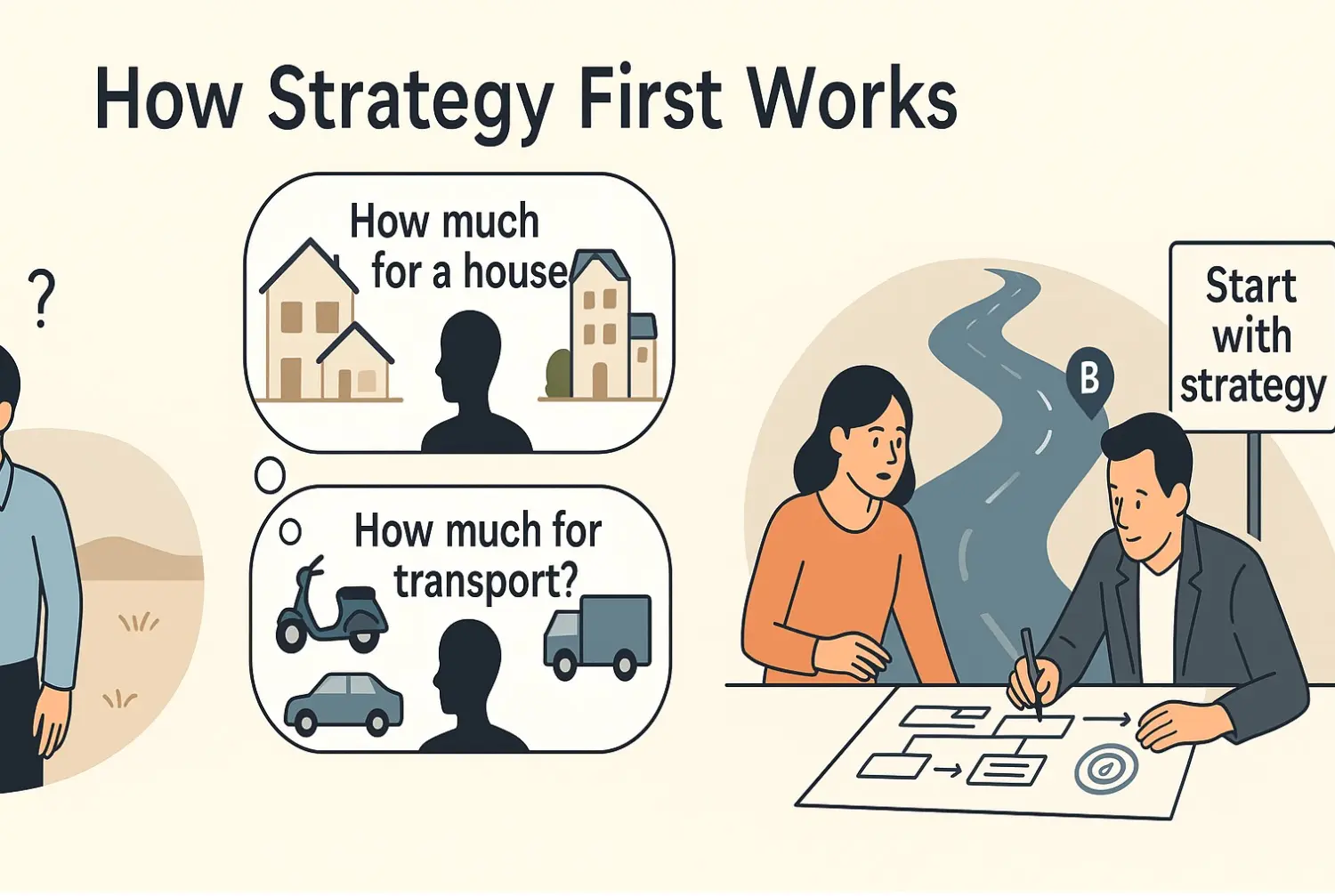
To sum up, step one, the subscription for one person at a screen. Step two, the API when software takes over the work. Step three, a rented dedicated machine when you need control and a pinned version. Step four, your own machine only when nothing else leave or the work must continue offline.
Your documents can stay in house while the AI is rented. And intention is not a project and a server is not a strategy.